
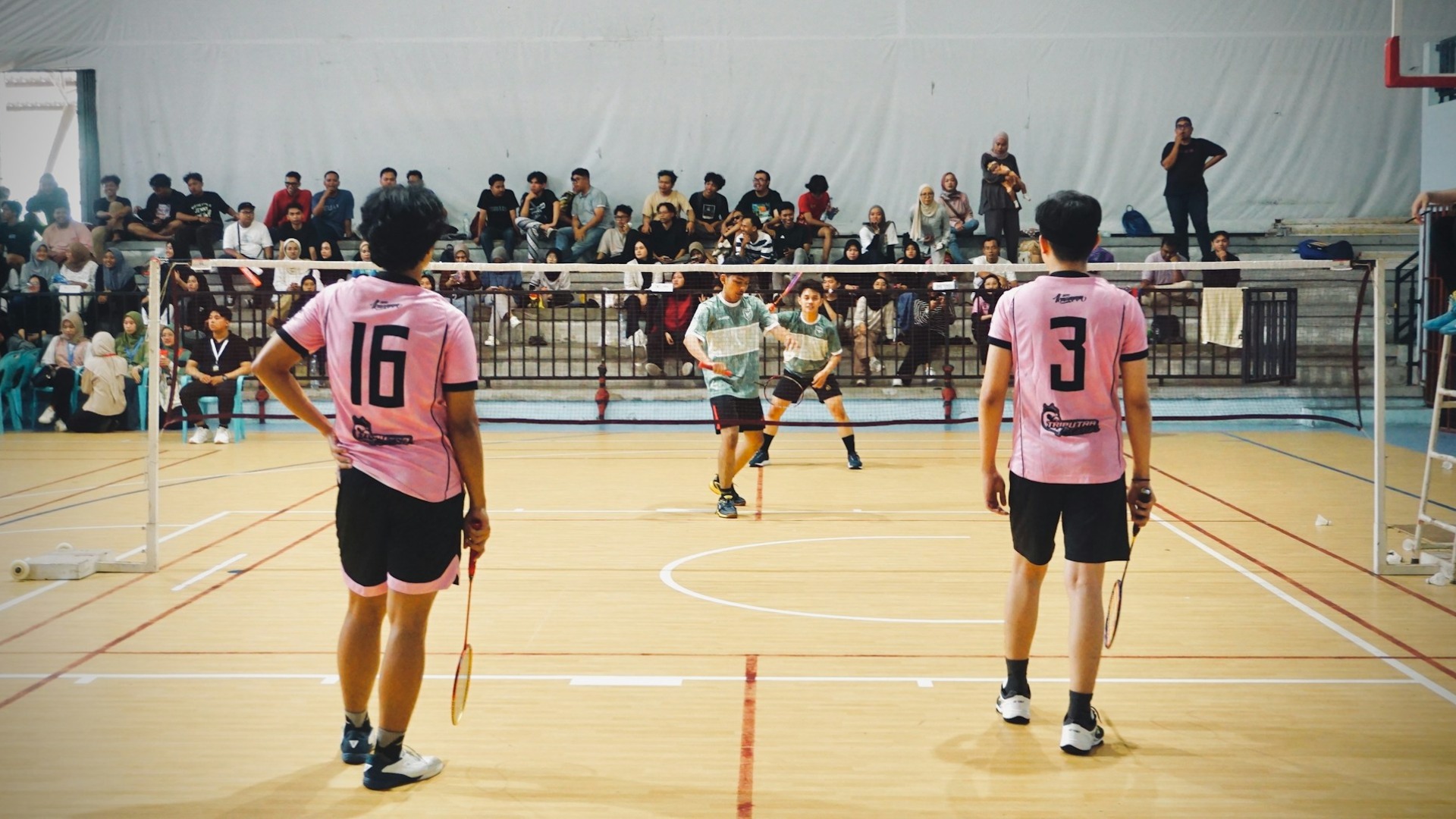
The Fast-Paced Nature of Doubles Badminton
Professional doubles badminton is one of the fastest disciplines in the sport. Unlike singles, where players cover the entire court individually, doubles relies on teamwork, communication, and tactical coordination. Success depends on two players working as a unit, making quick decisions, and maintaining consistent pressure on their opponents.
At the highest level, even the smallest tactical advantage can determine the outcome of a match.
Building Strong Team Chemistry
One of the most important factors in professional doubles is partnership. Successful pairs develop a deep understanding of each other's playing style, movement, and decision-making.
Clear communication during rallies helps partners avoid confusion, improve court coverage, and react quickly to changing situations. Teams that trust each other are often able to perform more consistently under pressure.
Effective Court Positioning
Proper positioning is essential in doubles badminton. Teams constantly adjust their positions depending on whether they are attacking or defending.
When attacking, players often adopt a front-and-back formation. The player at the back controls powerful smashes and clears, while the player near the net looks for opportunities to intercept returns and finish rallies.
During defensive situations, teams usually switch to a side-by-side formation, allowing both players to cover the width of the court and defend against powerful attacks.
Attacking With Continuous Pressure
Elite doubles teams aim to maintain attacking momentum throughout a rally. Powerful smashes, steep angles, and quick follow-up shots force opponents into defensive positions.
Instead of attempting immediate winners on every shot, professional pairs build pressure gradually, waiting for the right opportunity to end the rally with a decisive attack.
Fast Net Play
Net play is one of the most important aspects of doubles badminton. Players positioned at the front of the court look to intercept weak returns, play tight net shots, and create attacking opportunities for their partner.
Quick reactions and excellent racket control allow front-court players to dominate short exchanges and keep constant pressure on the opposing team.
Smart Shot Selection
Winning doubles teams avoid unnecessary risks. They vary their shot selection by combining smashes, drives, drops, pushes, and clears to keep opponents guessing.
Changing the pace and direction of rallies makes it more difficult for opponents to anticipate the next shot, creating openings for attacking play.
Strong Defensive Coordination
Defense in professional doubles requires excellent teamwork. Both players must move together, maintain proper spacing, and communicate effectively during high-speed rallies.
Successful defensive pairs stay patient under pressure, return powerful smashes with accuracy, and wait for opportunities to regain the attack.
Quick Transitions Between Attack and Defense
Modern doubles badminton is defined by rapid transitions. Teams must be able to switch instantly from defending to attacking after a single return.
Professional players practice these transitions extensively, ensuring they can reorganize their positioning without losing balance or court coverage.
Tactical Preparation Before Matches
Elite doubles teams spend significant time analyzing opponents before tournaments. Coaches study match footage to identify serving patterns, preferred attacking shots, defensive weaknesses, and movement habits.
This preparation allows players to develop match-specific strategies and adapt quickly during competition.
The Future of Professional Doubles
Professional doubles badminton continues to evolve through faster gameplay, improved training methods, and advanced performance analysis. Teams are becoming more athletic, tactically disciplined, and technically skilled with every season.
As the sport continues to grow worldwide, doubles badminton remains one of the most exciting events, showcasing the perfect combination of speed, teamwork, precision, and strategy.