
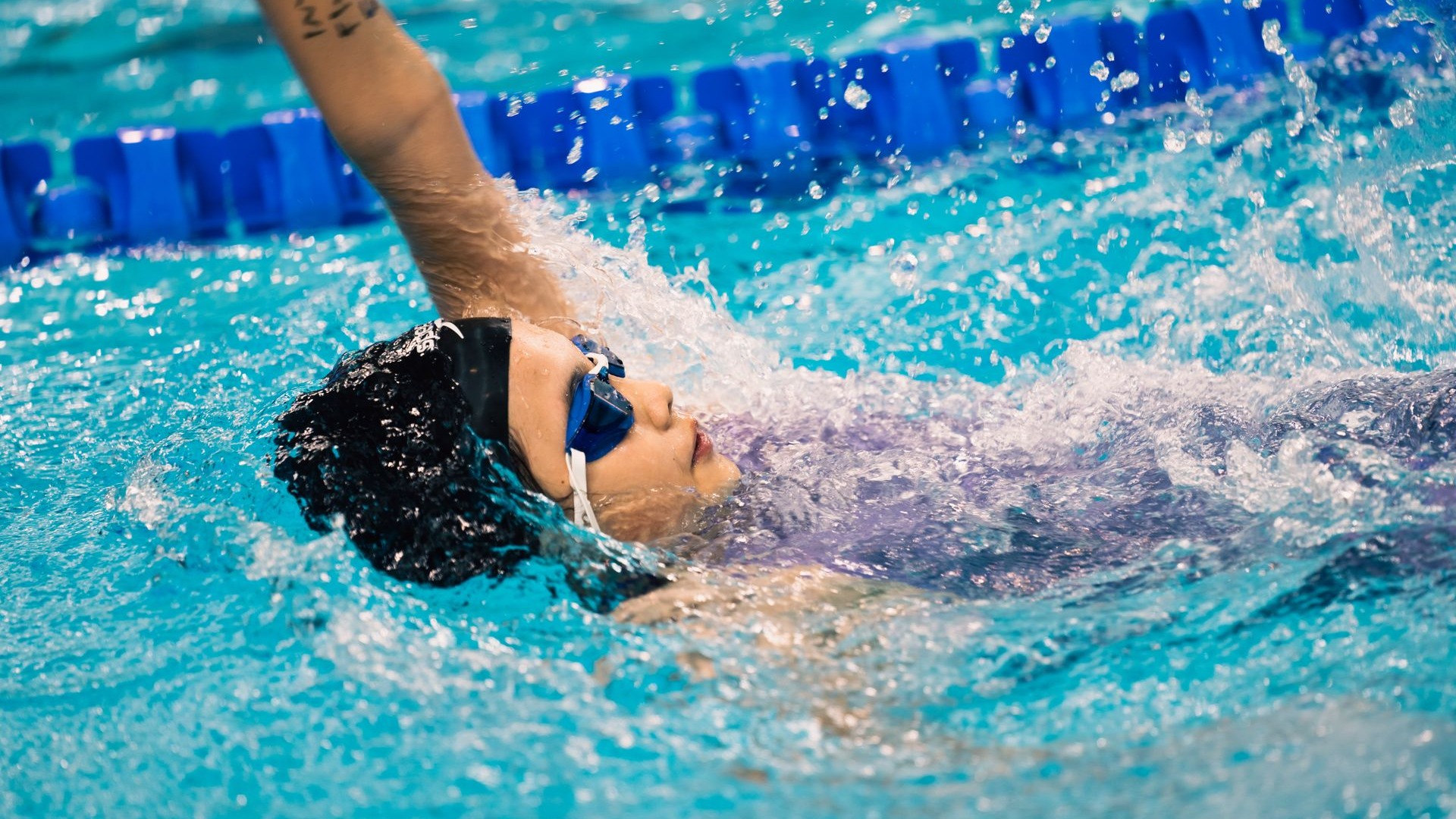
Understanding the Backstroke Technique
Backstroke is one of the four main competitive swimming strokes and the only one performed on the back. It requires a strong sense of balance, coordination, and spatial awareness since swimmers cannot directly see where they are going. Instead, they rely on stroke rhythm, lane markers, and counting strokes to stay aligned.
The stroke combines alternating arm movements with a continuous flutter kick, creating steady propulsion while keeping the body streamlined on the water’s surface.
Body Position and Balance in Water
A correct body position is essential for efficient backstroke swimming. The swimmer should remain as flat and horizontal as possible, with the hips close to the surface to reduce drag. The head stays still, with eyes looking upward, while the body rotates slightly from side to side with each arm stroke.
Maintaining balance is key, as even small movements in the head or hips can disrupt alignment and slow forward motion.
Arm Movement and Recovery
Backstroke arm action is continuous and alternating. One arm pulls underwater while the other recovers above the water in a straight, relaxed motion. The hand enters the water little finger first, followed by a deep pull phase that generates propulsion.
A strong pull through the water combined with a smooth recovery helps maintain consistent speed throughout the race.
Flutter Kick Technique
The flutter kick provides stability and continuous propulsion in backstroke. Legs move in a rapid up-and-down motion from the hips, with minimal knee bending. A steady kick helps maintain body position and supports the rhythm of the arm strokes.
Consistency in kick speed is more important than force, as it helps maintain balance and reduces drag.
Breathing and Rhythm Control
One advantage of backstroke is that breathing is unrestricted since the face remains above water. However, swimmers must still maintain controlled breathing patterns to support endurance and stroke rhythm.
Many swimmers synchronize breathing with stroke cycles to maintain efficiency and avoid unnecessary tension in the body.
Starts and Underwater Phase
Backstroke starts differ from other strokes because swimmers begin in the water while holding the starting grips on the pool wall. At the start signal, they push off explosively and enter a streamlined position on their backs.
The underwater phase is crucial, as swimmers often use dolphin kicks before surfacing to maximize speed. A strong start can provide a significant advantage in short-distance races.
Turns and Lane Awareness
Backstroke turns require precise timing. As swimmers approach the wall, they must rotate onto their front before performing a flip turn or open turn depending on competition rules. Proper execution helps maintain momentum and avoid losing speed.
Since swimmers cannot see forward, lane awareness is developed through counting strokes and using overhead lane markers to judge distance to the wall.
Common Mistakes in Backstroke
Several common errors can reduce performance in backstroke, including dropping the hips too low, over-rotating the body, inconsistent kicking, and improper arm recovery. These mistakes increase drag and reduce efficiency.
Coaches often use video analysis to help swimmers correct technique and improve overall performance.
Building Strong Backstroke Performance
Mastering backstroke requires consistent training focused on technique, endurance, and body control. Drills that improve rotation, kick consistency, and stroke timing are essential for developing speed and efficiency.
With proper technique and regular practice, swimmers can achieve smooth, fast, and controlled backstroke performance in competitive events.